Crypto Market Recap: Bitcoin Rally Fades Toward $63K
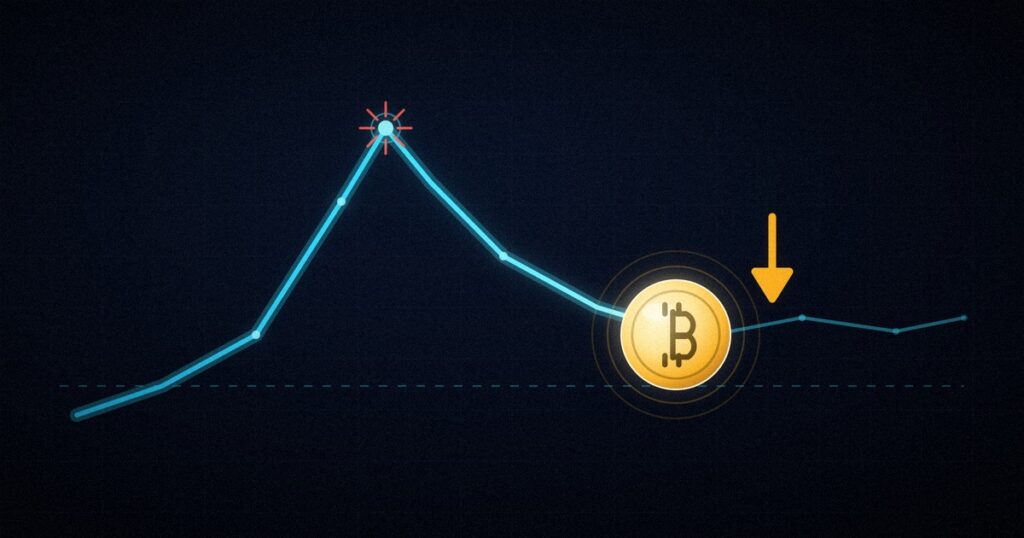
The crypto market spent last week climbing a wall of good news, only to slide back down the other side. Bitcoin briefly cleared $65,000 after a cooler-than-expected U.S. inflation report, then handed most of those gains back as renewed conflict in the Middle East sapped investors’ appetite for risk. By the start of this week, Bitcoin was changing hands near $63,000 — roughly where it had opened seven days earlier.
Thank you for reading this post, don't forget to subscribe!The week in numbers
The round trip was the defining feature of the past seven days. Bitcoin opened Wednesday, July 15, around $64,975, up more than 4% on the day, after June data showed the largest single-month decline in U.S. consumer prices since April 2020. Ethereum rode the same wave, pushing above $1,900 before easing to roughly $1,860 by the weekend. Neither move held: a sixth consecutive day of U.S. airstrikes against Iran dragged risk assets lower into Friday and through the weekend, and both majors surrendered the bulk of their mid-week rally.
On a seven-day basis, the two largest cryptocurrencies finished close to flat. The total crypto market capitalization sat near $2.22 trillion, little changed from the prior week, while Bitcoin’s share of that total held in the high-50% range. Trading volumes cooled as the initial inflation-driven surge faded and traders turned defensive.
| Asset | Price (approx.) | 7-day trend | Notes |
|---|---|---|---|
| Bitcoin (BTC) | ~$63,000 | Roughly flat | Tagged $65K mid-week, then faded |
| Ethereum (ETH) | ~$1,860 | Roughly flat | Briefly topped $1,900 on CPI data |
| Solana (SOL) | ~$76 | Slightly lower | Still below the early-July ~$83 peak |
| XRP | ~$1.09 | Range-bound | Held a tight $1.08–$1.18 band |
| Total market cap | ~$2.22T | Little changed | Volumes cooled into the weekend |
Altcoins mark time
Among the larger altcoins, the picture was one of consolidation rather than breakout. Solana traded around $76, up more than 1% on Sunday but still well short of the $83 area it touched in early July. XRP hovered near $1.09, holding the tight $1.08–$1.18 band that has framed its July range. Chatter about a possible ‘altseason’ continued to circulate, but higher-for-longer interest-rate expectations and cautious institutional flows kept a lid on the market’s more speculative corners. For a closer look at the two majors, see our recent Bitcoin and Ethereum deep-dive.
What moved the market
Two forces pulled in opposite directions. On the bullish side, the softer inflation print revived hopes that the U.S. Federal Reserve has more room to ease policy later in the year, while steady inflows into spot Bitcoin and Ethereum exchange-traded funds continued to absorb available supply. On the bearish side, geopolitics dominated the back half of the week. Cryptocurrency remains highly sensitive to global risk sentiment, and escalating Middle East tensions are exactly the kind of shock that sends traders toward cash and gold rather than digital assets. The net result was a market that looked strong on Wednesday and defensive by Friday. Readers following the macro backdrop can revisit our full inflation-week coverage for the details behind the CPI move.
The Israeli angle
For Israel’s blockchain ecosystem, weeks like this are a reminder of how closely local sentiment tracks both global macro data and regional security headlines. Israeli investors watched the same CPI-driven rally and the same geopolitical pullback — with the added weight of being close to the conflict itself. The country’s crypto infrastructure, meanwhile, keeps building through the noise: firms such as Fireblocks in digital-asset custody, StarkWare in Ethereum scaling, and brokers like Bits of Gold and the Tel Aviv-founded platform eToro continue to give Israeli users regulated on-ramps to the market. The Bank of Israel is also advancing its digital-shekel research, a signal that blockchain rails are being taken seriously at the policy level even when spot prices swing. You can follow all of our weekly market recaps for the ongoing story.
The week ahead
With the inflation catalyst now priced in, the near-term direction of Bitcoin and the broader crypto market is likely to hinge on two things: whether Middle East tensions cool or escalate, and whether ETF inflows resume their steady pace. A calmer geopolitical backdrop could let the mid-week highs come back into view, while further escalation would keep risk assets on the back foot. For now, a market that ended roughly where it started is arguably a resilient one, given everything that was thrown at it.
Under the surface
Beneath the flat headline price, the plumbing of the market told a more constructive story. Spot Bitcoin exchange-traded funds continued to log net inflows even as prices wobbled, a sign that longer-term buyers used the mid-week dip to add exposure rather than head for the exit. On-chain, exchange balances stayed near multi-month lows, meaning fewer coins were sitting ready to be sold, and stablecoin supply held firm — dry powder that can move back into Bitcoin and Ethereum quickly if sentiment turns. None of this guarantees the next leg is up, but it suggests last week’s pullback was driven more by macro fear than by holders rushing to sell.
For Hebrew-language coverage, visit coindex.co.il. Portuguese readers can find similar analysis at coindice.com.br.
This content is for informational purposes only and does not constitute financial advice.
Open your MEXC digital wallet and get exclusive deposit bonuses. Over 1,700 digital currencies available!
🔗 Open a Free MEXC AccountAffiliate link • Sign up in seconds