Layer 2 Scaling Solutions: Your Complete Guide for 2026
As Bitcoin holds steady at $78,170 and Ethereum trades at $2,326, millions of crypto users are transacting daily across blockchain networks. But these networks face a fundamental challenge: how do you scale to serve billions of users without sacrificing speed, security, or decentralization? The answer — increasingly embraced by the global crypto community in 2026 — lies in Layer 2 (L2) scaling solutions.
Thank you for reading this post, don't forget to subscribe!What Is Layer 2?
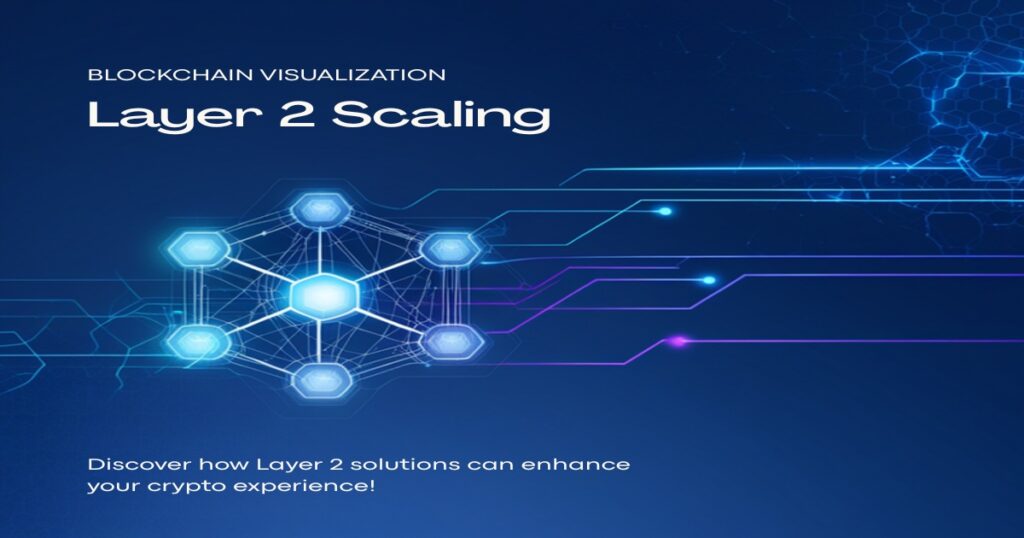
Layer 2 refers to a secondary framework or protocol built on top of an existing blockchain (the “Layer 1”) to dramatically improve its scalability and transaction efficiency. The base layer — Ethereum or Bitcoin, for example — handles security, consensus, and final settlement. Layer 2 networks process the bulk of transactions faster and at a fraction of the cost, then periodically anchor results back to the base chain.
Think of it like a highway system: Layer 1 is the main interstate — secure and reliable but heavily congested during peak hours. Layer 2 networks are dedicated express lanes that move traffic faster, periodically merging back with the main road. This architecture preserves the trustlessness of the base chain while dramatically increasing throughput from a few dozen transactions per second to thousands.
The Four Main Types of Layer 2 Solutions
1. Optimistic Rollups
Optimistic rollups batch hundreds or thousands of transactions together and submit them to the Layer 1 chain as a single compressed bundle, “optimistically” assuming all included transactions are valid. If anyone detects fraud, they can raise a challenge during a dispute window — typically seven days. Leading examples include Arbitrum and Optimism (OP Mainnet), which together regularly process over $5 billion in daily transaction volume. Thanks to these rollups, Ethereum gas fees have dropped from $20–$50 during congestion peaks to under $0.10 for everyday DeFi interactions.
2. ZK Rollups (Zero-Knowledge Rollups)
ZK rollups use advanced cryptographic proofs — called zero-knowledge proofs — to validate the correctness of batched transactions almost instantly, without requiring any dispute window. This makes them faster and more capital-efficient than optimistic rollups. In 2026, zkSync Era, StarkNet, and Polygon zkEVM are among the most active ZK rollup networks, collectively processing millions of transactions daily. Ethereum’s own roadmap has been strategically oriented around ZK rollups as the primary long-term scaling mechanism — a vision that is increasingly becoming reality.
3. State Channels
State channels allow two or more parties to conduct many off-chain transactions, recording only the opening and final state on the main blockchain. Bitcoin’s Lightning Network is the most well-known example, enabling near-instant BTC payments at near-zero cost for micropayments and peer-to-peer transfers. As Bitcoin maintains strength above $78,000 and its dominance sits at 58% of the total $2.68 trillion market, the Lightning Network has seen growing real-world adoption for everyday commerce and cross-border payments.
4. Validiums and Plasma
Validiums operate similarly to ZK rollups but store transaction data off-chain, further reducing costs at the expense of some data availability guarantees. Plasma chains are an earlier L2 architecture that processes transactions off-chain with periodic Ethereum anchoring. While less prominent today than rollups, both remain relevant for high-throughput, low-cost applications like blockchain gaming, NFT platforms, and enterprise supply chain solutions.
Why Layer 2 Matters for the $2.68 Trillion Crypto Market
With Ethereum’s market cap at $280.74 billion and the global crypto market reaching $2.68 trillion, the stakes for scalability are enormous. Before widespread L2 adoption, Ethereum gas fees during network congestion could exceed $50 per transaction — pricing out smaller users, hobbyist developers, and emerging market participants. Today, Arbitrum and Optimism routinely process transactions for under $0.10, while zkSync fees can be as low as $0.01. This scalability breakthrough has unlocked entirely new categories of blockchain use cases:
- Micropayments and streaming payments — sending tiny fractions of crypto in real time
- On-chain gaming — high-frequency in-game transactions at negligible cost
- Decentralized social media — platforms like Farcaster and Lens building on L2
- High-frequency DeFi trading — arbitrage and market-making strategies now economically viable on-chain
The total value locked (TVL) across all L2 networks surpassed $40 billion in early 2026, reflecting extraordinary developer and institutional confidence in this architecture.
The Israeli Blockchain Angle: Pioneering ZK Technology
Israel’s blockchain ecosystem — one of the most dynamic globally per capita — has been at the forefront of Layer 2 innovation, particularly in zero-knowledge proof research. StarkWare Industries, founded by academics from the Weizmann Institute of Science and the Technion (Israel’s leading technology university), pioneered the STARK proof system — a powerful variant of zero-knowledge proofs that underpins StarkNet, one of the world’s most technically sophisticated blockchain scaling platforms. StarkWare has raised hundreds of millions in venture funding and its technology is used by major DeFi protocols and blockchain gaming platforms worldwide.
Beyond StarkWare, Israeli Web3 startups and fintech companies have been early adopters of L2 networks to offer cost-effective blockchain services to their users. The combination of Israel’s strong academic cryptography research and entrepreneurial culture has made it a natural leader in the ZK-proof space — a critical component of the blockchain scaling future. Hebrew-speaking readers can find in-depth coverage of Israel’s crypto ecosystem at coindex.co.il.
A Practical Guide: How to Get Started with Layer 2
For readers looking to move beyond Layer 1 and experience lower fees firsthand, here is a step-by-step starter guide:
- Set up a compatible wallet: MetaMask, Rainbow, or Rabby all support L2 networks natively and are free to download.
- Add the network: In your wallet’s network settings, add Arbitrum One, Optimism, or zkSync Era. Most wallets now auto-suggest these from a curated list — or visit Chainlist.org for a complete directory.
- Bridge your assets: Use official bridges (Arbitrum Bridge at bridge.arbitrum.io, Optimism Gateway at app.optimism.io/bridge) or multi-chain aggregators like Stargate Finance to move ETH or stablecoins from Ethereum mainnet to your chosen L2.
- Transact and explore: Once bridged, interact with DeFi protocols, DEXes like Uniswap (available on Arbitrum and Optimism), or NFT marketplaces — all at a fraction of mainnet cost.
- Withdraw when ready: Bridge back to Ethereum mainnet. Note that optimistic rollup withdrawals carry a standard 7-day challenge window; ZK rollup withdrawals are typically processed within minutes to a few hours.
What’s Next for Layer 2 in 2026 and Beyond
The Layer 2 landscape is evolving at breakneck speed. Ethereum’s landmark Dencun upgrade — which introduced “blob” data via EIP-4844 — dramatically reduced the cost of data posting for rollups when it launched in early 2024. Subsequent protocol upgrades in 2025 and 2026 have continued this trend, pushing L2 fees even lower. The long-term vision — sometimes called the “Ethereum Rollup-Centric Roadmap” — envisions thousands of specialized L2 and L3 chains serving different applications (gaming, finance, social, enterprise) while sharing Ethereum’s battle-tested security. This modular blockchain architecture is arguably the most significant structural development in crypto since the introduction of smart contracts.
Portuguese-speaking readers interested in DeFi and blockchain technology can find parallel analysis and coverage at coindice.com.br.
As Bitcoin holds firm above $78,000 and Ethereum continues its technical evolution at $2,326, Layer 2 scaling solutions represent one of the most concrete and compelling proofs that blockchain technology is maturing into a global financial infrastructure. Whether you are a developer building the next generation of decentralized applications, an investor evaluating the Ethereum ecosystem, or an everyday user looking to transact peer-to-peer without prohibitive fees, understanding Layer 2 is no longer optional — it is essential knowledge for anyone serious about participating in the crypto economy of 2026.
This information is for informational purposes only and does not constitute financial advice. Cryptocurrency investments involve significant risk, including the possible loss of principal. Always conduct your own research before making any investment decisions.
Open your MEXC digital wallet and get exclusive deposit bonuses. Over 1,700 digital currencies available!
🔗 Open a Free MEXC AccountAffiliate link • Sign up in seconds