Layer 2 Scaling Explained: How Rollups Work in 2026
If you have used a blockchain application in 2026 and paid only a few cents in fees, you were almost certainly using a Layer 2. Layer 2 networks have quietly become the plumbing of the modern crypto market, moving the bulk of everyday transactions off congested base chains while keeping their security. This guide explains what Layer 2 is, how rollups work, and why the technology matters for anyone building or investing in Web3, including a growing community of developers in Israel.
Thank you for reading this post, don't forget to subscribe!What Problem Does Layer 2 Solve?
A blockchain like Ethereum is often described as a global computer that everyone shares. That shared design is exactly what makes it secure and censorship-resistant, but it also creates a bottleneck: every node must process every transaction. When demand spikes, fees rise and confirmations slow down. With Ethereum trading around $1,920 and the total cryptocurrency market capitalisation near $2.278 trillion in late July 2026, activity is heavy enough that base-layer space is a scarce resource.
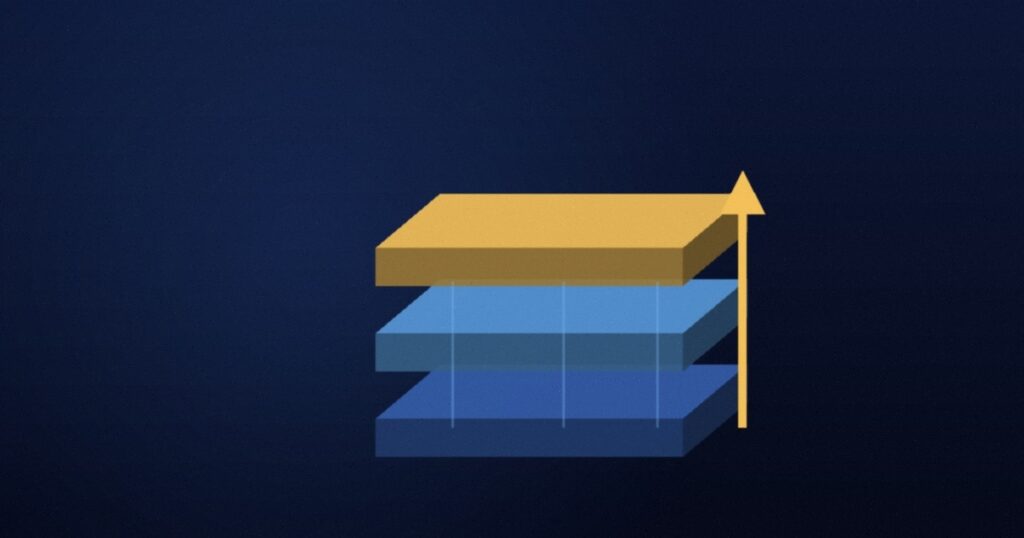
A “Layer 1” is the base blockchain itself, such as Ethereum or Bitcoin. A “Layer 2” is a separate network built on top of it that handles transactions independently, then periodically settles a compressed summary back to the Layer 1. The base chain provides security and final settlement; the Layer 2 provides speed and low cost. Think of the Layer 1 as a national court system and the Layer 2 as thousands of local offices that batch their paperwork and file it upstream in bulk.
Rollups: The Dominant Layer 2 Design
The most important Layer 2 category is the rollup. A rollup executes many transactions off-chain, bundles (“rolls up”) hundreds or thousands of them together, and posts the compressed data plus a proof of correctness to Ethereum. Because the base chain stores the data and can verify the proof, users inherit Ethereum’s security without paying Ethereum’s full per-transaction cost. There are two main flavours.
Optimistic rollups assume every batch is valid by default and allow a challenge window during which anyone can submit fraud proof if they spot an invalid transaction. They are simple and highly compatible with existing Ethereum tooling. Zero-knowledge (ZK) rollups take a different route: they generate a cryptographic validity proof for each batch, so correctness is guaranteed mathematically the moment the proof is posted. ZK rollups offer faster final settlement and have matured rapidly, and Israeli cryptography expertise has played a notable role in advancing the underlying zero-knowledge research.
Rollups vs. Base Layer: A Quick Comparison
| Feature | Ethereum (Layer 1) | Rollup (Layer 2) |
|---|---|---|
| Typical fee | Dollars per transaction at peak | Cents or fractions of a cent |
| Speed | Limited shared throughput | High, processed off-chain |
| Security source | Its own validator set | Inherited from Ethereum |
| Best for | Settlement, high-value transfers | Payments, trading, gaming, DeFi |
This division of labour is why Layer 2 has become central to decentralized finance. Trading on a decentralized exchange, providing liquidity, or earning rewards through staking all become far cheaper when the transaction runs on a rollup rather than the base chain. Lower fees widen access, which is one reason DeFi usage kept climbing even as headline coin prices consolidated through 2026.
Trade-offs and Risks to Understand
Layer 2 is not free of trade-offs. Many rollups still rely on a “sequencer” that orders transactions, and today most sequencers are operated by a single team, which is a centralisation point the industry is actively working to decentralise. Optimistic rollups impose a withdrawal delay because of their challenge window, though bridges and liquidity providers usually smooth this over for users. And moving assets between Layer 1 and Layer 2 through bridges has historically been a target for exploits, so users should stick to well-audited, established networks. As always, understanding where your assets actually sit is part of responsible participation in the crypto market.
The Israeli Angle: Web3 Builders and Cryptography Talent
Israel is unusually well positioned in the Layer 2 story. The country’s deep bench of cryptography and security talent has fed directly into zero-knowledge research and rollup infrastructure, and local startups continue to build scaling tools, developer platforms and on-chain applications. The regulatory backdrop is shifting too: the Israeli Crypto, Blockchain and Web 3.0 Companies Forum is lobbying for reforms that a KPMG study suggests could add roughly 120 billion shekels (about $38 billion) to the economy by 2035 and create some 70,000 jobs. With more than a quarter of Israelis having used crypto in the past five years, cheaper Layer 2 rails could accelerate real-world adoption of Israel blockchain applications, from payments to tokenised assets.
The Bottom Line
Layer 2 rollups are the practical answer to blockchain’s scaling problem: they keep the security of a base chain like Ethereum while making transactions fast and affordable enough for everyday use. Optimistic and ZK rollups take different technical paths to the same goal, and both are now core infrastructure for DeFi, payments and Web3 more broadly. For builders and users in Israel, the combination of local cryptography expertise and a maturing regulatory framework makes Layer 2 one of the most important areas to watch. You can explore more explainers in our DeFi and NFT section and follow price context in our Ethereum coverage.
For Hebrew-language coverage, visit coindex.co.il. Portuguese readers can find similar analysis at coindice.com.br.
This content is for informational purposes only and does not constitute financial advice.
Open your MEXC digital wallet and get exclusive deposit bonuses. Over 1,700 digital currencies available!
🔗 Open a Free MEXC AccountAffiliate link • Sign up in seconds