Proof of Work vs Proof of Stake: A Clear Guide
Every blockchain faces the same fundamental problem: thousands of computers that do not know or trust each other have to agree on a single, shared record of who owns what. The rules that let them reach that agreement without a central authority are called a consensus mechanism, and the two that dominate the industry are Proof of Work (PoW) and Proof of Stake (PoS). Understanding the difference is one of the most useful things a crypto investor can learn, because it shapes a network’s security, its energy footprint, and even its long-term investment case. This guide explains both in plain language.
Thank you for reading this post, don't forget to subscribe!Why consensus matters
In a traditional bank, one trusted institution keeps the ledger and decides which transactions are valid. A blockchain replaces that single referee with a network of participants and a set of rules that make cheating expensive and honesty profitable. The consensus mechanism is that rulebook. It decides who gets to add the next block of transactions, how the rest of the network verifies it, and what reward the participant earns for doing the work. Get this design right and the network is secure and decentralized; get it wrong and it is either easy to attack or quietly controlled by a few players.
Proof of Work: security through energy
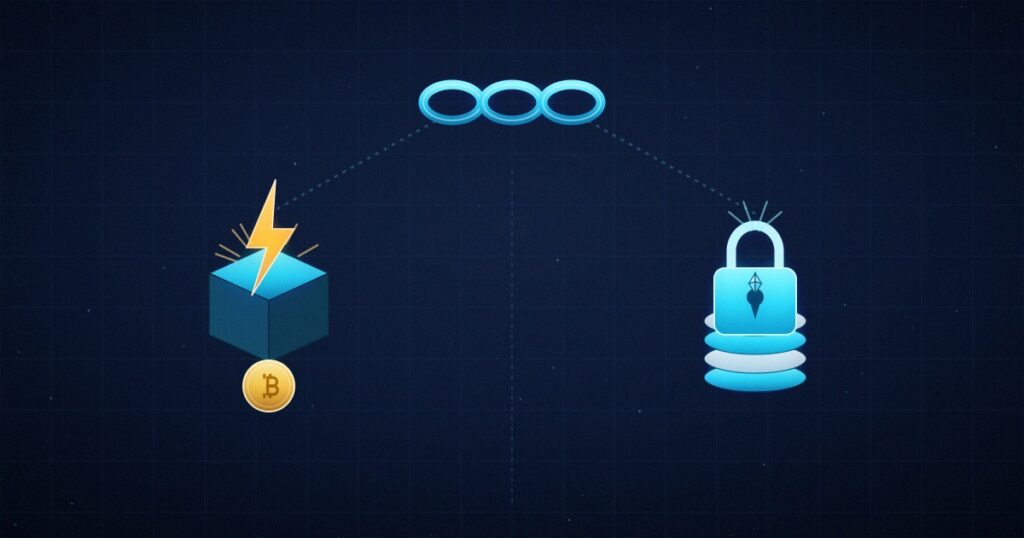
Proof of Work is the original mechanism, introduced by Bitcoin in 2009. Specialized computers called miners compete to solve a hard mathematical puzzle. The puzzle has no shortcut — the only way to solve it is to try trillions of guesses per second — so winning requires real computing power and real electricity. The first miner to find the answer earns the right to add the next block and collect the block reward. Because rewriting history would mean redoing all that work faster than the entire honest network combined, tampering is astronomically costly. That is the elegance of PoW: security is anchored in the physical world of hardware and energy.
The trade-off is efficiency. Bitcoin’s network consumes as much electricity as a mid-sized country, and the arms race for faster machines concentrates mining among those with the cheapest power. With Bitcoin trading near $78,000, the incentive to expand mining capacity remains enormous, which keeps the network extraordinarily secure but also keeps its energy debate very much alive.
Proof of Stake: security through capital
Proof of Stake replaces the energy race with an economic one. Instead of miners, the network has validators who lock up — or “stake” — a quantity of the native coin as collateral. The protocol then chooses a validator to propose each block, roughly in proportion to how much they have staked. Honest validation earns rewards; trying to cheat gets a validator’s stake “slashed,” or partially destroyed. Security here comes not from burning electricity but from putting real money at risk. Ethereum switched from PoW to PoS in 2022 in an upgrade known as The Merge, cutting its energy use by more than 99% overnight.
PoS also changes the economics of holding a coin. On Ethereum, which trades near $2,450, staked ETH earns a yield, and a large and growing share of supply is now locked up by validators and staking services. That reduces the amount of coin freely circulating on exchanges — a dynamic that has become central to Ethereum’s 2026 story as institutional demand climbs. If you want to go deeper on staking mechanics, our DeFi and staking guides cover the practical side.
Side by side
| Feature | Proof of Work | Proof of Stake |
|---|---|---|
| Who secures it | Miners (hardware) | Validators (staked coins) |
| Cost of participation | Electricity & equipment | Capital locked as stake |
| Energy use | Very high | Very low |
| Attack deterrent | Redoing the work | Losing the stake (slashing) |
| Main example | Bitcoin | Ethereum, Solana, Cardano |
| Rewards to holders | None (unless mining) | Staking yield |
Neither is simply “better”
The two camps trade blows over the same issues. PoW supporters argue that anchoring security in real-world energy makes Bitcoin the most battle-tested and credibly neutral network, and that its transparent, hardware-based costs are a feature, not a bug. PoS supporters counter that their model achieves comparable security at a tiny fraction of the energy cost, and that staking makes the network more accessible because you do not need a warehouse of machines to take part. Critics of PoS worry it can favor the wealthiest holders and reintroduce a subtle form of centralization; critics of PoW point to its environmental footprint. Both concerns are legitimate, and both mechanisms keep evolving to address them.
The Israeli angle
Israel’s blockchain sector has a direct stake in the future of consensus — particularly on the Proof of Stake side. Netanya-founded StarkWare is a global leader in zero-knowledge proof technology, which lets Ethereum’s PoS base layer scale to far more transactions without sacrificing security; its work is a key reason PoS chains can grow without ballooning costs. On the institutional front, Tel Aviv-based Fireblocks provides the custody and staking infrastructure that lets funds and banks stake large amounts of ETH safely, connecting traditional finance to PoS yields. Israel’s deep bench of cryptography talent, rooted in institutions like the Technion and the Weizmann Institute, means the country punches well above its weight in exactly the mathematics that underpins modern consensus. Even the Bank of Israel’s digital-shekel research leans on this expertise, though a central-bank currency would use a permissioned design rather than open PoW or PoS.
The bottom line
Proof of Work and Proof of Stake are two answers to the same question: how do strangers agree on a shared truth without a boss? Bitcoin secures its ledger with energy and hardware; Ethereum and most newer chains secure theirs with staked capital and the threat of slashing. Neither is universally superior — they represent different trade-offs between security, decentralization, efficiency and accessibility. Knowing which mechanism a coin uses tells you a great deal about how it works, how it is secured, and what owning it might earn you.
For Hebrew-language coverage, visit coindex.co.il. Portuguese readers can find similar analysis at coindice.com.br.
This content is for informational purposes only and does not constitute financial advice.
Open your MEXC digital wallet and get exclusive deposit bonuses. Over 1,700 digital currencies available!
🔗 Open a Free MEXC AccountAffiliate link • Sign up in seconds