DeFi and Web3 Explained: A 2026 Beginner’s Guide
Decentralized finance, better known as DeFi, has quietly grown into one of the most important pillars of the cryptocurrency economy. While headlines tend to follow the price of Bitcoin and Ethereum, a parallel system of lending markets, exchanges and savings products is being rebuilt on public blockchains — with no banks in the middle. This guide explains what DeFi and Web3 actually are, how the core pieces fit together, and where the crypto market stood in mid-June 2026.
Thank you for reading this post, don't forget to subscribe!What Is Web3, and Where Does DeFi Fit?
Web3 is shorthand for a third era of the internet. Web1 was read-only pages; Web2 was the interactive, platform-dominated web of social media and cloud apps. Web3 describes applications built on blockchains, where users hold their own assets and identity rather than renting them from a company. DeFi is the financial layer of Web3: a collection of open-source programs, called smart contracts, that let anyone lend, borrow, trade or earn yield using cryptocurrency — without a bank, broker or middleman approving the transaction.
The scale is no longer trivial. As of mid-June 2026, the total value locked (TVL) across DeFi protocols sits in the range of roughly $95–140 billion, depending on how you count newer categories such as liquid staking and restaking. Ethereum remains the dominant home for this activity, hosting about $57 billion in TVL — close to half of the entire DeFi market.
The Building Blocks of DeFi
A handful of core concepts make decentralized finance work, and understanding them removes most of the mystery:
- Wallets. A self-custody wallet — a browser extension such as MetaMask or a dedicated hardware device — holds your private keys. It is your account, login and signature all in one. “Not your keys, not your coins” is the industry’s blunt reminder that whoever controls the keys controls the funds.
- Smart contracts. Self-executing code deployed on a blockchain. When you deposit into a lending pool, a smart contract — not a loan officer — holds the collateral and enforces the rules automatically.
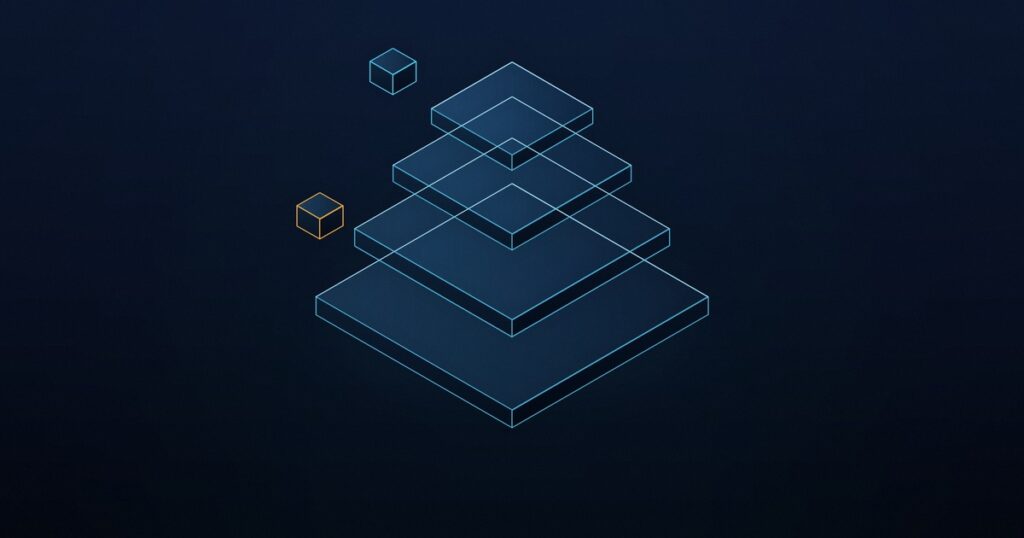
- Layer 2 (L2). Networks built on top of Ethereum that process transactions more cheaply and quickly, then settle back to the main chain. Layer 2s have made DeFi affordable for ordinary users by cutting transaction fees dramatically.
- Staking. Locking up cryptocurrency to help secure a blockchain in exchange for rewards. Ethereum’s shift to proof-of-stake turned ETH itself into a yield-bearing asset, and “liquid staking” protocols now let users stake while holding a tradable token that represents their deposit.
- Stablecoins. Tokens pegged to a currency such as the US dollar. With more than $300 billion in circulation, stablecoins are the cash that moves between DeFi applications.
The Market in Context
DeFi does not exist in a vacuum; it rises and falls with the broader crypto market. After a volatile start to June 2026 — Bitcoin fell roughly 11% to around $65,500 earlier in the month — prices steadied. By mid-June, Bitcoin was trading near $66,000 and Ethereum near $1,790, with the two assets up about 6.4% and 9.3% respectively versus the prior week. The total cryptocurrency market capitalization stood near $2.33 trillion, with Bitcoin dominance around 56.7%.
The table below contrasts the traditional financial system most people know with how the same functions work in DeFi:
| Function | Traditional Finance | DeFi / Web3 |
|---|---|---|
| Who holds your money | A bank | You, via a self-custody wallet |
| Who approves a loan | A loan officer | A smart contract |
| Hours of operation | Business hours | 24/7, year-round |
| Settlement time | Days | Seconds to minutes |
| Access | Account approval required | Open to anyone with a wallet |
For Ethereum in particular, DeFi is more than a side feature — it is a core source of demand. The two largest DeFi protocols illustrate the point: Aave, a lending market, holds around $26 billion in deposits, while Lido, a leading staking protocol, holds roughly $23 billion. Both run primarily on Ethereum, which helps explain why ETH’s value is increasingly tied to genuine on-chain activity rather than speculation alone.
The Risks You Should Know
DeFi’s openness is also its danger. Smart contracts can contain bugs that drain funds; “stablecoins” can occasionally lose their peg; and unusually high advertised yields often carry hidden risk. Because there is no bank or regulator to reverse a mistaken or malicious transaction, self-custody demands real responsibility. The sensible approach for newcomers is to start small, stick to established protocols, and treat every advertised return with healthy skepticism.
The Israeli Blockchain Angle
Israel sits surprisingly close to the center of this story. Much of the Layer 2 technology that makes DeFi usable traces back to Israeli engineering: StarkWare, founded in Israel, pioneered the zero-knowledge “rollup” cryptography now widely used to scale Ethereum, and its Starknet network is among the most prominent Layer 2s. On the infrastructure side, Fireblocks — another Israeli-founded company — has become one of the world’s most widely used platforms for securing the digital assets held by banks and exchanges. Israeli regulators, meanwhile, continue to refine their approach: the Israel Securities Authority has worked to bring digital assets under clearer rules, and the Bank of Israel has explored the idea of a digital shekel. For a country often called “Startup Nation,” blockchain and Web3 have become a natural extension of its deep-tech strengths.
The Bottom Line
DeFi and Web3 represent an ambitious attempt to rebuild financial services as open, programmable software. The sector is large enough to matter — well over $100 billion locked in smart contracts and growing — yet still young enough to carry real risk. For anyone learning the space, the goal is not to chase yield but to understand the building blocks: wallets, smart contracts, Layer 2 networks, staking and stablecoins. Master those, and the rest of the Web3 landscape becomes far easier to navigate.
For Hebrew-language coverage of the crypto market, visit coindex.co.il. Portuguese readers can find similar analysis at coindice.com.br.
This content is for informational purposes only and does not constitute financial advice.
Open your MEXC digital wallet and get exclusive deposit bonuses. Over 1,700 digital currencies available!
🔗 Open a Free MEXC AccountAffiliate link • Sign up in seconds