Smart Contracts Explained: How Blockchain Runs on Code
Every time someone swaps tokens on a decentralized exchange, mints an NFT, or earns yield in a DeFi protocol, a smart contract is doing the work behind the scenes. Smart contracts are the self-executing programs that turn a blockchain from a simple ledger into a global, programmable computer.
Thank you for reading this post, don't forget to subscribe!This guide explains what smart contracts are, how they work, where they are used, and what to watch out for, in plain English and without the jargon.
What is a smart contract?
A smart contract is a piece of code stored on a blockchain that runs exactly as written when certain conditions are met. Think of it as a digital vending machine: you put in the right input, and it automatically delivers the agreed output, with no cashier and no bank in the middle. Because the code lives on a decentralized network, no single party can quietly change the rules after the fact. The concept was popularized by Ethereum, still the largest smart-contract platform, and you can follow the network’s development in our Ethereum coverage.
How smart contracts work, step by step
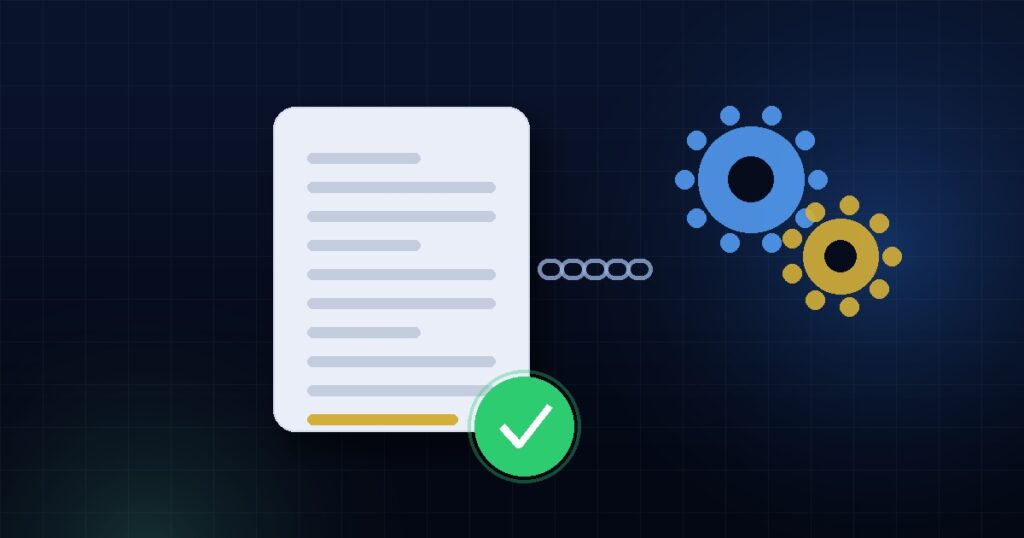
First, a developer writes the contract in a specialized language, most commonly Solidity on Ethereum. The code is then compiled and deployed to the blockchain, where it receives a unique address and becomes visible to anyone. From that point on, users interact with the contract by sending transactions to that address. When a transaction meets the contract’s conditions, the network’s nodes execute the code, update the shared ledger, and record the result permanently. Every step is transparent and verifiable, which is why smart contracts are often described as trustless: you do not have to trust a company, only the publicly auditable code.
Where smart contracts are used
Smart contracts are the engine behind most of what people call Web3. They underpin decentralized finance (DeFi), where they replace banks with automated lending, borrowing, and trading, a topic we cover in depth in our practical DeFi guide. They also power NFTs, which use contracts to prove digital ownership, as explained in our guide to NFTs and digital ownership.
| Use case | What the smart contract does |
|---|---|
| DeFi lending | Locks collateral and releases loans automatically, with no bank |
| Decentralized exchanges | Swaps one token for another using pooled liquidity |
| NFTs | Issues and transfers unique tokens that prove ownership |
| Stablecoins | Manages issuance, redemption, and reserves on-chain |
| DAOs | Enforces voting and treasury rules for online communities |
Smart contracts vs. traditional contracts
It helps to contrast smart contracts with the paper agreements they draw their name from. A traditional contract describes what should happen and relies on courts and intermediaries to enforce it after the fact. A smart contract, by contrast, encodes what will happen and enforces itself the moment its conditions are met, with no lawyer, notary, or bank required. That shift from description to automatic execution is what makes the technology so powerful, but it also means the code must be written flawlessly, because there is no judge to appeal to if something goes wrong.
The risks: bugs, exploits, and audits
Smart contracts are powerful precisely because they run automatically and cannot easily be reversed, but that is also their biggest risk. If the code contains a bug, attackers can exploit it, and there is often no customer-service desk to reverse the damage. Some of the largest losses in crypto history have come from flawed contracts rather than broken blockchains. This is why reputable projects pay independent security firms to audit their code before launch, and why users should favor established, audited protocols. As a rule of thumb, never interact with an unaudited contract with money you cannot afford to lose, and always double-check the contract address you are approving.
The Israeli angle
Israel is one of the most active hubs for smart-contract innovation. StarkWare, based in Netanya, pioneered the use of zero-knowledge (ZK) rollups and its Cairo programming language to make smart contracts on Ethereum dramatically cheaper and faster to run, a key part of the Layer 2 scaling story. Tel Aviv-founded Fireblocks secures the infrastructure institutions use to interact with contracts safely, and a cluster of Israeli security and auditing firms specialize in finding vulnerabilities before they are exploited. For a country with deep roots in cryptography and cybersecurity, smart contracts are a natural fit, and Israeli talent continues to shape how the technology matures.
Key takeaways
Smart contracts are automated agreements written in code and enforced by a blockchain. They remove middlemen, run transparently, and power everything from DeFi and NFTs to stablecoins and DAOs. Their strengths, automation and immutability, are also the source of their risks, so security audits and careful user behavior matter enormously. Understanding smart contracts is the single best way to understand why blockchains are more than just digital money, and why the technology continues to attract builders around the world, Israel very much included.
For Hebrew-language coverage, visit coindex.co.il. Portuguese readers can find similar analysis at coindice.com.br.
This content is for informational purposes only and does not constitute financial advice.
Open your MEXC digital wallet and get exclusive deposit bonuses. Over 1,700 digital currencies available!
🔗 Open a Free MEXC AccountAffiliate link • Sign up in seconds